
VGP Water Testing
Ballast Water - VGP & VIDA Compliance Services
Ensure Your Vessel’s Compliance with U.S. EPA and USCG Regulations
Vessels calling at ports in the United States must comply with regulations established by the US EPA 2013 Vessel General Permit (VGP) and the forthcoming Vessel Incidental Discharge Act (VIDA).
Such vessels are required to have ballast water treatment systems approved by the US Coast Guard (USCG). During the first year of operation, ballast water must be tested two to four times for intestinal Enterococci, Escherichia coli (E. coli), and total heterotrophic bacteria (THB) levels.
If a vessel discharges effluent in US waters, it must obtain discharge authorization and electronically report sampling and analysis results for all waste streams—including ballast water, grey water, bilge water, and scrubber water—to the United States Environmental Protection Agency (EPA).
In summary, any vessel equipped with a Ballast Water Treatment System (BWTS) that calls at US ports is required to have a valid Vessel General Permit. Failure to maintain this permit can result in fines imposed by the USCG.
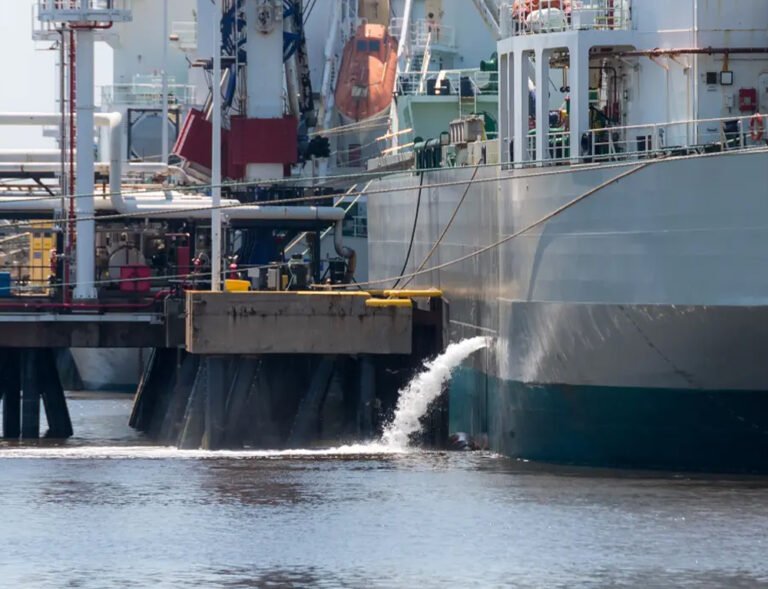
On December 19, 2013, the US Environmental Protection Agency (EPA) issued a revised Vessel General Permit (VGP), which mandates the use of Environmentally Acceptable Lubricants (EALs) in all oil-to-water interfaces—such as stern tube seals and thruster seals—on all merchant vessels 79 feet or longer operating in US coastal and inland waters.
Under the VGP, vessels operating in these waters must carry a valid permit, which is subject to inspection by the US Coast Guard (USCG).
In 2018, the Vessel Incidental Discharge Act (VIDA) was enacted to streamline federal, state, and local regulations governing vessel discharges within US waters. VIDA is set to replace the 2013 VGP and will fully take effect in 2024. While VIDA currently incorporates the VGP’s requirements, it introduces new obligations for ship operators and masters, including:
- Self-assessment and reporting to the USCG
- Installation, calibration, and regular maintenance checks of systems like ballast water treatment systems
This legislation aims to simplify compliance while maintaining environmental protection standards for vessels operating in US waters.
Vessels equipped with BWTS using chemical biocide will need to comply with Effluent Biological Organism Monitoring And Residual Biocide and Derivative Monitoring
Vessels with BWTS not using chemical-based treatment methods need only comply with Effluent Biological Organism Monitoring
Biological Indicator Compliance Monitoring:
| Type of Monitoring | Devices for Which High Quality Type Approval Data Are Available | Devices for Which High Quality Data Are Not Available |
| Intial | 2 times | 4 times per year |
| Maintenance | 1 or 2 times per year (*) | 4 times per year |
Vessels equipped with ballast water treatment systems must conduct biological indicator monitoring of their ballast water discharge, following these requirements:
- For vessels using systems with high-quality type approval data:
- Monitoring must be performed twice during the first year of system installation or use.
- If two consecutive samples are within permit limits, the vessel owner/operator may reduce monitoring to once per year starting in the second year.
- If any sample exceeds permit limits, monitoring must return to twice per year and continue at that frequency until two consecutive samples again fall within permit limits.
- For vessels without high-quality type approval data:
- Monitoring is required four times per year, without the option to reduce frequency.
- For all vessels:
- One sampling event each year may be conducted during a vessel’s annual or other scheduled survey.
- In the first year, one sample may be collected during system installation to verify proper operation.
- Samples should be small in volume and collected from the ballast water discharge, in accordance with EPA’s Generic Protocol for the Verification of Ballast Water Treatment Technology (ETV Protocol).
Biocides and Residuals Monitoring
| Type of Monitoring | Devices for Which High Quality Type Approval Data Are Available | Devices for Which High Quality Type Approval Data Are Not Available |
| Intial | 3 times in the first 10 discharge events (not to exceed a 180 day period). | 5 times in the first 10 discharge events (not to exceed a 180 day period). |
| Maintenance | 2 times per year | 4 times per year |
Many ballast water treatment systems use or generate biocides to reduce the number of living organisms in ballast water tanks.
For vessels using such systems, operators are required to monitor ballast water discharge for any residual biocides or their byproducts. This monitoring helps ensure compliance with permit conditions, confirms that harmful byproducts are not being produced in significant quantities, and provides the EPA with
Analytical Method Details for Residual
Biocides and Biocide Derivative
| Biocide | Analyte | Analytical Methods | Minimum Sample Volume | Sample Holding Time | MDL | Effluent Limit or Action | Limit Type |
| Alkylamines | Alkylamines | EPA Method 8360B and 8270D | 25 mL (8260B) | 14 days (8260B) | Varies by compound (8260D); 10 μg/L (8270C) | Report | NA |
| Chlorine or Chlorine Dioxide* | Chlorine Dioxide* | EPA Method 327.0-1; SM 4500 ClO2 E | 16 mL (327.0-1) | 4 hours (327.0-1); As soon as possible(SM) | Varies (327.0-1); 10 to 100 mg/L (SM) | 200 μg/L | Instantaneous Maximum |
| Total Residual Oxidizers (TRO) as Cl2* | SM 4500-Cl G; ISO 7393/2 | 50 mL | 15 minutes | 10 μg/L, under ideal conditions | 100 μg/L | Instantaneous Maximum | |
| Chlorite | EPA Method 300.1 | CFU or 250 mL | 14 days | Varies | Report | NA | |
| Chlorate | EPA Method 300.1 | 250 mL | 28 days | Varies | Report | NA | |
| Total trihalomethanes** | EPA Method 8260 | 25 mL | 14 days | Varies | Report | NA | |
| Haloacetic acids*** | EPA Method 552.2 | 40 mL | 14 days | Varies by compound | Report | NA | |
| Menadione | Menadione | NA | — | — | — | Report | NA |
| Ozone | Total Residual Oxidizers (TRO) as Cl2 | SM 4500-Cl G; ISO 7393/2 | 50 mL | 15 minutes | 10 μg/L, under ideal conditions | 100 μg/L | Instantaneous Maximum |
| Bromate | EPA Method 317 ; EPA Method 300.1; ASTM D 6581-00 | 250 mL | 28 days (317; 300.1) | Varies (317; 300.1) | Report | NA | |
| Bromoform | EPA Method 8260 | 25 mL | 14 days | Varies | Report | NA | |
| Total trihalomethanes** | EPA Method 8260 | 25 mL | 14 days | Varies | Report | NA | |
| Haloacetic acids*** | EPA Method 552.2 | 40 mL | 14 days | Varies by compound | Report | NA | |
| Peracetic acid | pH | SM 4500 H+ | 25 mL | As soon as possible | NA | 6.5 – 9 s.u | Instantaneous Maximum |
| Peracetic acid | Photometric analysis(Pinkernell, 1997; EMD Chemicals, 2011; CHEMetrics 2010) | 25 mL | As soon as possible | 500 μg/L | Report | NA | |
| Hydrogen peroxide | Titimetric analysis (JIS K 1463:2007; EMD Chemicals, 2011; CHEMetrics 2010)) | 25 mL | As soon as possible | 500 μg/L | 1000 μg/L | NA |
✅ What We Offer
We provide end-to-end support for vessels operating under the U.S. VGP/VIDA requirements:
 Onboard Attendance & Sampling
- Sampling in accordance with ETV Protocol and BWMS Code
- Field testing using EPA-approved methods (40 CFR 136.3)
- Sample collection bottles and containers supplied per VGP standards
 Sample Transportation
- Transport within regulated timeframes
- Adherence to required preservation, temperature, and light conditions
 Lab Testing in Accredited Laboratories
- Analysis using EPA-designated methods (40 CFR 136.3)
- Monitoring for:
- Biological Indicators (E. coli, Enterococci, heterotrophic bacteria)
- Biocides & Residuals (for systems using electrolysis, chemicals, ozone, etc.)
 Regulatory Reporting
- Submission of sampling and analytical results to the EPA
- Reports formatted to meet EPA electronic reporting standandard
🔍 Why Compliance Matters
- S. Coast Guard (USCG) enforcement of EPA’s VGP is active and ongoing
- Non-compliance may lead to fines, delays, or port entry denial
- A valid Vessel General Permit (VGP) is required for ballast water discharges
- Accurate and timely monitoring, testing, and reporting is essential
📞 Ready to Stay Compliant?
Whether your BWMS is chemical-based or mechanical, we provide tailored services to ensure you meet all discharge monitoring requirements under VGP and VIDA.
👉 [Contact us] today for a customized compliance plan or to schedule a sampling session.